
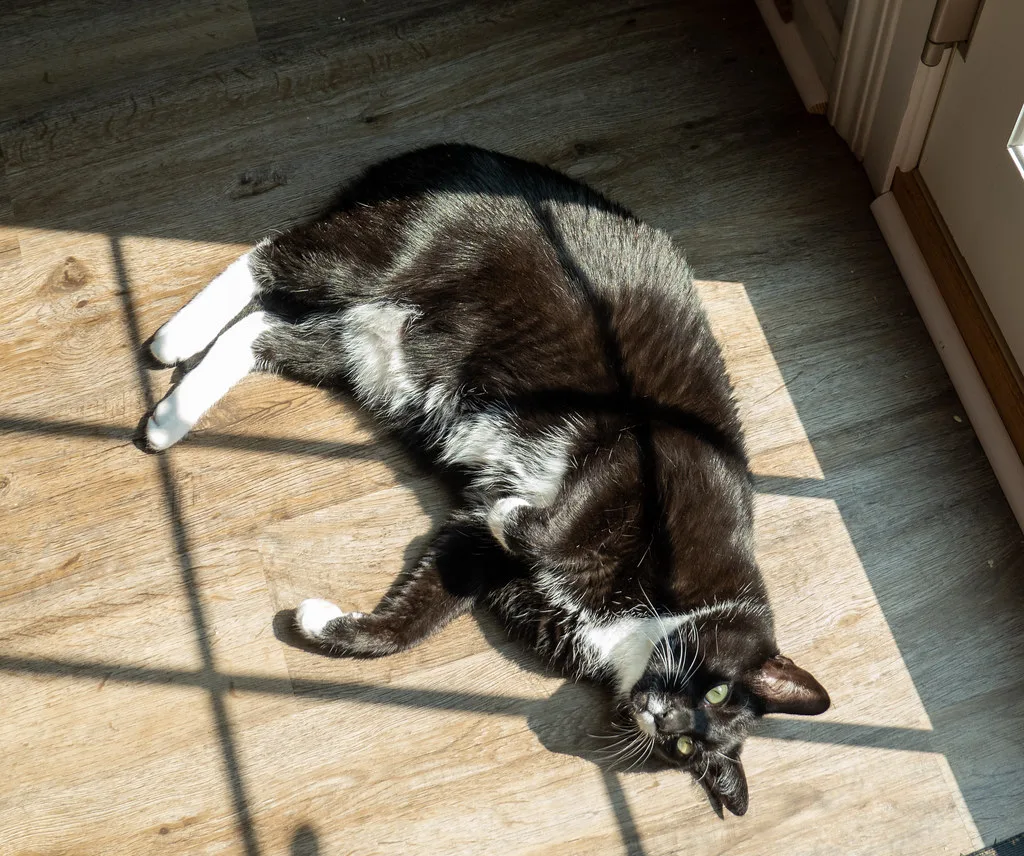
Cats love warmth. You'll find them sprawled across the sunniest patch of the windowsill, basking in heat that would send us straight for the shade. It's easy to assume the heat doesn't bother them. But the truth is different: cats overheat too, and heatstroke in a cat is an emergency that can be fatal.
The good news is that with a few simple measures, your cat can spend even the hottest days safely and comfortably. Let's look at how.
Short answer: Keep a cat safe in summer by providing constant access to fresh water and shade, closing curtains during the hottest hours, and never leaving her in an enclosed, poorly ventilated space like a car, greenhouse, or shed. A cat's normal body temperature is 38.1-39.2°C (100.5-102.5°F), and rising above 40°C (104°F) is dangerous and requires emergency veterinary care, according to PDSA.
Which cats are most at risk from heat?
All cats can overheat, but some handle heat worse than others. According to PDSA and the ASPCA, higher-risk cats include:
- Flat-faced (brachycephalic) breeds like Persians - they can't pant as effectively.
- Overweight cats - they cool down less easily.
- Long-haired cats - a dense coat traps heat.
- Very old and very young cats, plus cats with heart or lung disease.
If your cat falls into one of these groups, give her extra attention in summer and keep her in the coolest part of the home.
How do you recognize heatstroke in a cat?
Cats hide discomfort well, so it helps to know what to watch for. Signs of heatstroke, per PDSA and VCA Animal Hospitals, include:
- Rapid breathing or panting (cats rarely pant otherwise)
- Gums that turn bright red or, conversely, go pale
- Weakness, confusion, wobbliness
- Vomiting or diarrhea
- Skin hot to the touch
- In severe cases, collapse, seizures, and loss of consciousness
Heatstroke is an emergency. If you suspect it, act immediately - every minute counts.
What should you do if a cat overheats?
If you notice signs of heatstroke, the goal is to cool the cat gradually and get her to a vet as fast as possible. Per the Merck Manual and VCA:
- Move the cat to a cool, shaded place immediately.
- Cool her with cool, but not ice-cold, water - damp towels, pouring water over the body, with a fan. Never submerge her in ice water, as that can cause shock.
- Offer a small amount of water if the cat can drink on her own.
- Unlike most emergencies, a cat with heatstroke should not be kept warm during transport - wrap her in a cool, damp towel.
- Take her to the vet right away, even if she seems better.
As PDSA stresses, the quicker a cat is cooled, the better her chance of recovery.
Which summer hazards are most often overlooked?
In cats, the most common cause of heatstroke is actually being accidentally shut inside a hot, poorly ventilated space. According to RSPCA, these are sheds, greenhouses, garages, conservatories, and cars - temperatures inside can quickly reach 47°C (117°F), which is fatal.
So always check the shed, garage, and greenhouse before closing them up - a curious cat easily slips inside and gets trapped. And never, not even for a moment, leave a cat in a parked car.
Another overlooked hazard is the sun. Cats with white or pale fur, especially on the ears and nose, are prone to solar dermatitis - sun damage to the skin that, according to VCA, can over time progress to skin cancer. For these cats it helps to avoid direct sun between 10 a.m. and 4 p.m. and, with a vet's advice, use a sunblock made for cats. Human sunscreens can be toxic to cats.
How do you cool a cat down at home?
A few simple habits make a big difference on hot days. Following VCA and RSPCA recommendations:
- Fresh water always available - in several spots around the house. In the heat you can add an ice cube.
- Close curtains and blinds during the day to keep rooms cooler.
- A fan or cooling mat helps air circulation and cooling.
- A damp towel for the cat to lie on, or gently wipe her coat with a damp hand.
- Regular brushing - removing excess fur helps a cat cool more easily.
- Provide cool resting surfaces; asphalt, wood, and even artificial turf can get very hot.
Frequently Asked Questions
Do cats sweat? Cats cool themselves mainly by panting and through their paw pads, not by sweating across the whole skin like humans. That's why it's harder for them to cool down and why access to shade and water is critical in summer.
At what temperature is a cat too hot? There's no single "safe" number, but a cat's normal body temperature is 38.1-39.2°C (100.5-102.5°F). When body temperature rises above 40°C (104°F), that's dangerous overheating requiring emergency vet care.
Does a cat need sunscreen? Cats with white or pale fur, especially on the ears and nose, can benefit from sun protection. Use only products made for cats and consult your vet - human creams can be toxic.
What is the most common cause of heatstroke in cats? Most often it's being accidentally shut inside a hot, poorly ventilated space - a greenhouse, shed, garage, or car. Always check these spaces before closing them.
This article is for informational purposes only and is not a substitute for veterinary advice. Always consult your veterinarian before changing your pet's diet, medication, or treatment.