
How Much Water Should a Dog Drink per Day?
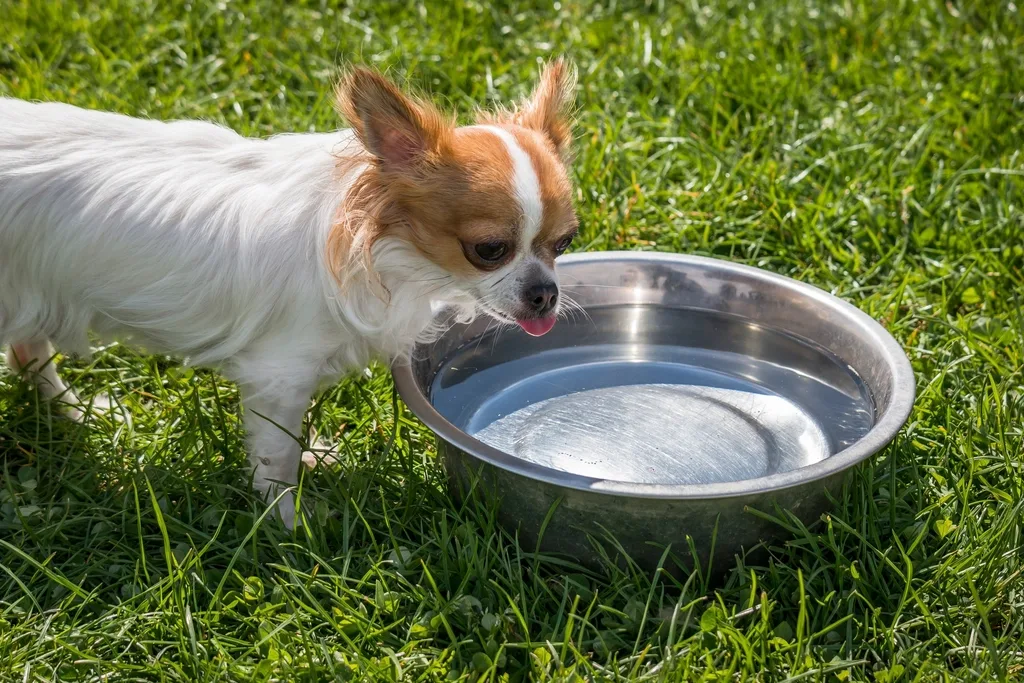
Have you ever watched your dog come back from a summer walk and drain the whole water bowl in one go? Or, on the other hand, noticed that for days he has barely touched it and wondered whether that's okay? Water is so ordinary that it's easy to overlook - yet it's one of the most important things for your dog's health.
The right amount depends on your dog's weight, the weather, activity, and the type of food. Let's look at how much is actually enough and how to spot when something is off.
Short answer: As a general rule, a dog needs roughly 40-60 ml of water per kilogram of body weight per day, according to the Merck Veterinary Manual. For a 10 kg dog, that's about 400-600 ml a day. The need rises in heat, with exercise, and for dogs on dry food. Fresh water should always be available.
How much water does a dog need per day?
The general guideline cited by both the AKC and the Merck Manual is about 40-60 ml per kilogram of body weight per day. In practice:
- A 5 kg dog: roughly 200-300 ml a day
- A 10 kg dog: roughly 400-600 ml a day
- A 20 kg dog: roughly 800-1200 ml a day
- A 30 kg dog: roughly 1200-1800 ml a day
These numbers are a frame, not a rule carved in stone. A healthy dog with constant access to water regulates its own intake very well, so water should not be restricted.
One important factor is food. Canned (wet) food contains over 80% water, while dry food has only about 3-11%, per the Merck Manual. That's why dogs on dry food naturally drink more from the bowl than those on wet food - and that's completely normal.
What affects how much a dog drinks?
Water needs aren't the same every day. Several factors increase them:
- Heat and humidity - in summer and after time in the sun, dogs dehydrate faster and drink more.
- Physical activity - after a long walk, a run, or play, the need for water rises.
- Type of food - dry food means more drinking from the bowl, wet food less.
- Age - puppies need more water relative to their size and dehydrate faster.
- Health status - some illnesses and medications change water intake.
For puppies, the AKC notes that during weaning they need about half a cup of water every two hours, and later roughly half an ounce to an ounce (15-30 ml) per pound of body weight per day. Because of their smaller size, puppies are especially sensitive to dehydration.
How do you know if a dog is dehydrated?
Dehydration can be dangerous, and fortunately there are simple tests you can do at home. According to the AKC:
- Skin test: gently lift the skin between the shoulder blades and release it. In a well-hydrated dog, the skin springs back instantly. If it returns slowly, the dog is likely dehydrated.
- Gum test: press a finger lightly on the gums. The spot turns white, and in a healthy dog the color returns almost immediately. A delayed return signals dehydration.
Other signs include loss of appetite, weakness, panting, a dry nose, sunken eyes, and dry or sticky gums. If you notice these symptoms, persistent vomiting, or suspect heatstroke, contact your vet immediately - this is considered a medical emergency.
Can a dog drink too much water?
It can - and drinking too much can signal a problem just as much as drinking too little. When a dog suddenly starts drinking far more than usual, that deserves attention.
The AKC describes excessive drinking (medically, polydipsia) as an intake above about 100 ml per kilogram per day, but a smaller increase is also worth investigating if it's a change from the norm. Increased thirst can be a sign of diabetes, kidney disease, Cushing's disease, and other conditions - over 30 possible causes are noted.
An important warning: never try to withhold water to "test" how much your dog needs. That can be life-threatening. Instead, record how much he drinks and see your vet for blood and urine tests.
There's also an opposite, rarer risk - water intoxication (hyponatremia), when a dog takes in too much water in a short time, most often during swimming or playing with a garden hose. It more often affects small breeds. Signs include weakness, a bloated belly, vomiting, loss of coordination, and pale gums. If you suspect this, go to the vet immediately.
How can you encourage a dog to drink enough water?
A few simple habits help keep a dog well hydrated, especially in summer:
- Keep fresh, clean water always available and change it several times a day.
- Wash the bowl regularly so slime and bacteria don't build up.
- On longer walks and trips, bring water and a bowl with you.
- In the heat, add an ice cube or two or offer several water stations around the house.
- If your dog eats only dry food, consider adding a little water to the meal.
Frequently Asked Questions
How much water does a 10 kg dog need? Roughly 400-600 ml a day, based on the 40-60 ml per kilogram guideline. The amount rises in heat, with activity, and if the dog eats dry food.
Is it normal for a dog to drink more in summer? Yes. In warm weather and after activity, dogs dehydrate faster and need more water. Make sure fresh water is always available.
When is increased thirst a cause for concern? If a dog suddenly starts drinking far more than usual, it can be a sign of kidney disease, diabetes, or another condition. Record the intake and consult your vet - don't restrict water on your own.
How much water does a puppy need? Puppies need more water relative to their size and dehydrate faster. During weaning that's about half a cup every two hours. Always consult your vet if you're unsure.
This article is for informational purposes only and is not a substitute for veterinary advice. Always consult your veterinarian before changing your pet's diet, medication, or treatment.