
The sun is blazing, your dog is staring at the leash, and you're wondering: is it even safe to go out? During a heatwave, that question matters more than most dog owners realize.
Unlike humans, dogs can't sweat through their skin to cool down - they regulate temperature primarily through panting and, to a smaller extent, through their paw pads. This makes them more vulnerable to overheating than you might expect, and it can happen faster than most owners anticipate.
The short answer: Walk your dog in the early morning or in the late evening once temperatures have dropped. During the hottest hours of the day, move activities indoors or into the shade, and always make sure fresh, cool water is available. These three steps form the foundation of summer safety for dogs.
Why Is Summer Heat Dangerous for Dogs?
Dogs rely on panting as their primary cooling mechanism. When the air around them is already hot, panting becomes less effective - and body temperature can rise quickly. Two groups face heightened risk, according to AVMA: brachycephalic (flat-faced) breeds like bulldogs, pugs, and boxers, who have a structurally limited airway, and overweight dogs.
The ground itself is a hidden danger. When air temperature reaches around 86°F (30°C), asphalt can climb to roughly 135°F (57°C) - hot enough to burn paw pads, according to the AKC. A simple test: press your bare hand flat on the pavement and hold it for 10 seconds. If it's too hot for your hand, it's too hot for your dog's paws.
What Are the Signs of Heatstroke in Dogs?
Every dog owner should know these signs. According to AVMA and the AKC, heatstroke warning signs include:
- Excessive or rapid panting and heavy drooling
- Weakness, drowsiness, or disorientation
- Vomiting or diarrhea
- Dry, sticky, or abnormally colored gums
If you notice these signs, act immediately: move your dog to shade or an air-conditioned space, place towels dampened with room-temperature water (not ice water) on the neck, armpits, and groin area, and get to a veterinarian as quickly as possible. Ice-cold water can cause shock - use cool, not cold.
Heatstroke is a veterinary emergency. Every minute counts.
When and How Should You Walk Your Dog in Summer?
The golden rule: early morning or late evening walks only. Both AVMA and the AKC recommend scheduling walks and exercise during the cooler parts of the day.
Before heading out, do the pavement test. If you can't hold your hand flat on the surface for 10 seconds, choose a grassy or shaded route instead. On very hot days, it may be better to skip outdoor walks entirely and replace them with indoor enrichment.
Never leave your dog in a parked car - not in the shade, not with windows cracked, not for a few minutes. Temperatures inside a vehicle can reach dangerous levels very quickly, even when it doesn't feel that hot outside.
Keep summer walks shorter than usual. Watch your dog: heavy panting, slowing down, or stopping to lie down are signals to turn back.
What Summer Activities Are Safe and Fun for Dogs?
Hot weather doesn't have to mean a bored dog. Here are activities that are enjoyable and genuinely safe during warm days.
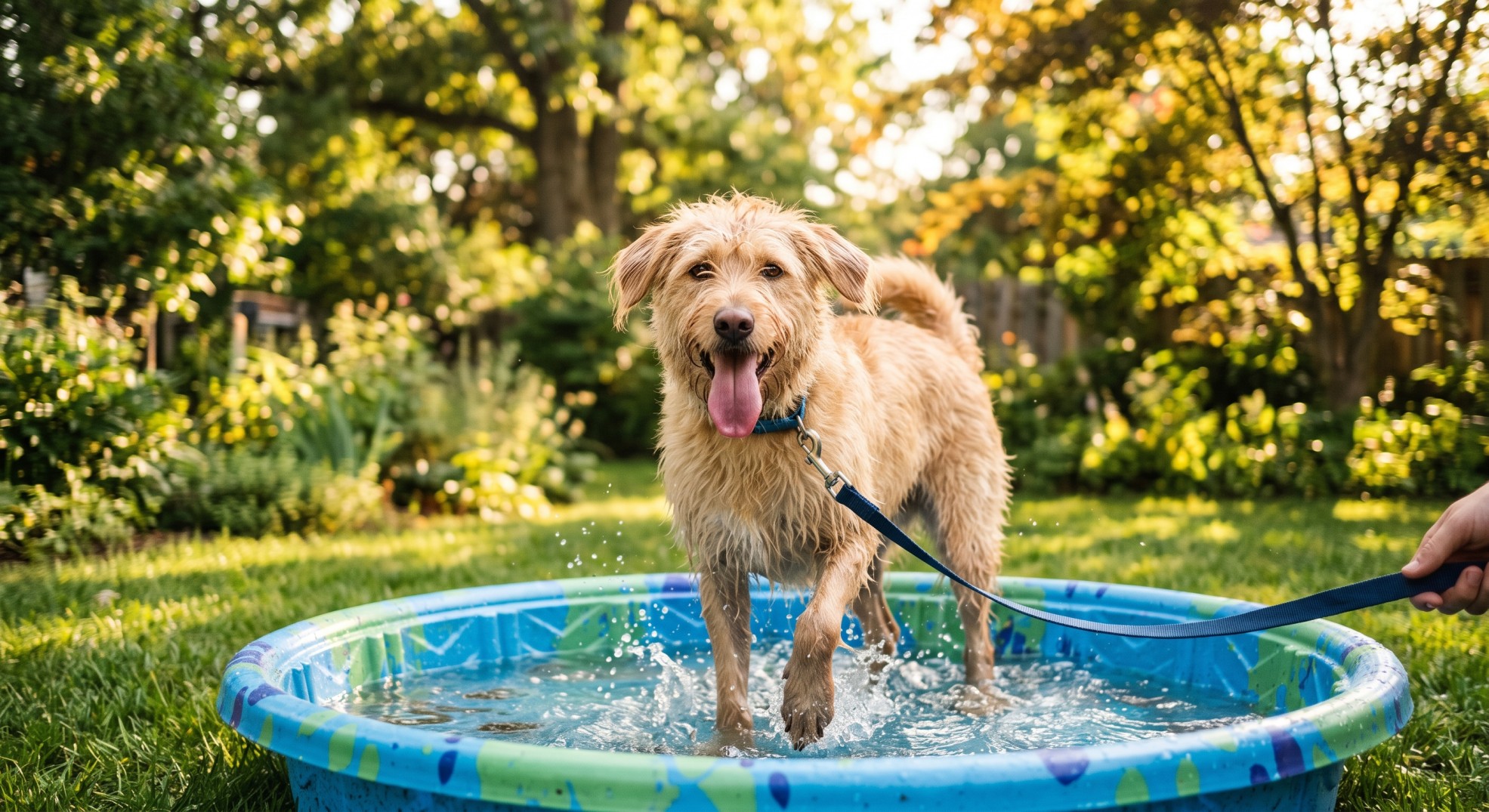
Water activities: Many dogs love water, and it's one of the best ways to combine exercise with cooling down. A kiddie pool filled with fresh water, a gentle spray from a garden hose, or a swim in a clean lake or river can all be great summer fun, according to the AKC. If your dog swims in deeper water, consider a dog life jacket for safety.
Not every dog is drawn to water, and that's completely fine. Never force your dog into water - always let them choose to enter on their own terms.
Indoor mental stimulation: Mental exercise can tire a dog just as effectively as physical activity. AKC and VCA Animal Hospitals suggest treat-finding games, hide-and-seek, trick training sessions, or a simple muffin-tin puzzle - hide treats under tennis balls and let your dog sniff them out.
Frozen treats: Homemade frozen snacks - like frozen dog-safe broth, plain yogurt, or dog-safe fruit (avoid grapes, raisins, and anything containing xylitol) - are a great way to keep your dog cool and engaged. A lick mat stored in the freezer is one of the simplest versions of this.
How Do You Cool Down a Dog at Home and Outside?
A few practical measures can significantly reduce the risk of overheating:
- Fresh cool water at all times - especially important during hot weather and after activity. An insulated bowl helps keep water cooler for longer.
- Shade or air conditioning during peak heat hours. Dog houses can actually trap heat in summer and are not good shelter on hot days.
- Cooling with water - gently pour cool (not ice-cold) water over your dog, or let them stand on a damp towel, which helps release heat through the paw pads.
- Cooling vests or mats can provide extra relief, especially for flat-faced breeds or dogs that struggle in the heat.
- Summer grooming - ask your vet or groomer whether a shorter coat would help your specific breed. For some double-coated breeds, the fur actually provides insulation against sun and heat and should not be shaved.
Frequently Asked Questions
Do dogs need more water in summer? Yes. Dogs have an increased need for water on hot days and after physical activity. Fresh, cool water should be available at all times. If you notice your dog drinking significantly more or less than usual, consult your veterinarian.
Can all dogs swim? Not all dogs are natural swimmers. Retrievers and sporting breeds often take to water easily, while flat-faced breeds or short-legged dogs may struggle. Never force a dog into water - always let them choose, and use a life jacket in deeper water.
Is it safe to walk flat-faced breeds like bulldogs or pugs in summer? Yes, but with extra caution. According to the AVMA, these breeds have an anatomically restricted airway and struggle more to cool down. Keep walks short, limit them to the coolest hours of the day, and watch carefully for any signs of overheating. On very hot days, indoor enrichment is the safer choice.
What should I do if I suspect my dog has heatstroke? Move them immediately to shade or a cool indoor space. Apply room-temperature damp towels to the neck, armpits, and groin area. Do not use ice water. Contact your veterinarian right away - heatstroke is a medical emergency.
This article is for informational purposes only and is not a substitute for veterinary advice. Always consult your veterinarian before changing your pet's diet, medication, or treatment.