
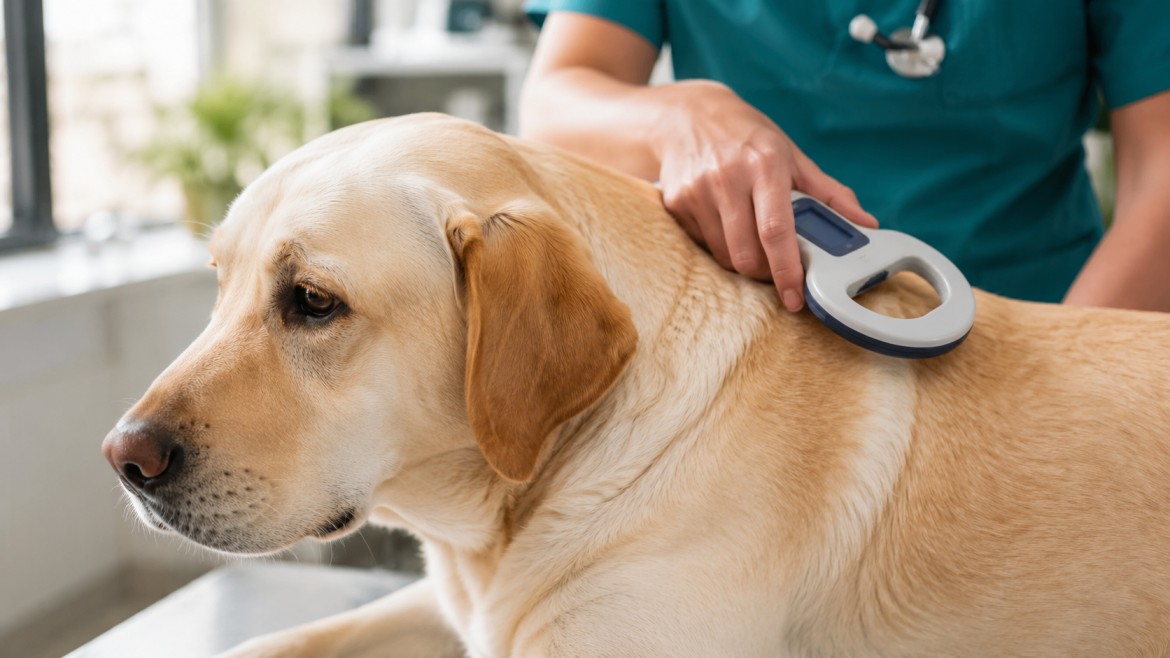
Someone finds a dog. It has no collar, but the finder has heard that "all dogs have a chip these days". So now what? Can they read it with a phone? Does the chip show where the dog lives? Does it even work?
If you have ever thought "mine is chipped, so I can relax", this article is for you. A microchip is one of the best things you can do for your pet - but most owners misunderstand how it actually works.
In short: a microchip is permanent identification the size of a grain of rice, read with a scanner at a vet clinic or shelter. Studies show chipped dogs and cats are returned to their owners far more often than unchipped ones - but a chip is not a GPS tracker, and it only works if your contact details in the registry are up to date.
What Is a Microchip and How Does It Work?
A microchip is a tiny device, about the size of a grain of rice, that a veterinarian places under your pet's skin with a needle - the procedure feels much like a routine shot. The chip has no battery and transmits nothing on its own: it activates only when a scanner passes over it, and then it displays its unique number.
That number is all the chip contains. In a registry database, the number is linked to your name and phone number - and it is that link, not the chip itself, that brings a pet home.
Is Microchipping Required Where You Live?
In many countries and regions, microchipping dogs is a legal requirement, and it is generally mandatory for pets travelling internationally. Rules differ by country and sometimes by city, so check with your veterinarian or local authority.
Even where it is optional - especially for cats - veterinarians widely recommend it, because cats are less likely to wear a collar and, as the numbers below show, benefit from chipping the most.
How Much Does a Chip Really Improve the Odds of a Reunion?
Here the numbers speak for themselves. A large study cited by the American Veterinary Medical Association (AVMA) followed animals that ended up in shelters:
- Dogs without microchips were returned to their owners 21.9% of the time. Chipped dogs - 52.2% of the time.
- For cats the difference is even more dramatic: only 1.8% of unchipped cats made it home, compared to 38.5% of chipped cats.
In other words, a chipped cat has more than twenty times better odds of getting home. If anyone has told you chipping a cat is unnecessary, these numbers say otherwise.
Can a Microchip Locate Your Pet?
No - and this is the most widespread myth. VCA veterinarians explain that a microchip is not a GPS device: it does not transmit a signal, does not connect to satellites, and cannot show where your pet is.
A chip "speaks" only when someone finds the animal and takes it to a vet or shelter to be scanned. That means days or weeks can pass between the escape and the scan - or it may never happen, if the finder does not know chips exist or cannot transport the animal.
Why Registry Details Matter More Than the Chip Itself
The AVMA notes that for chipped animals that were never returned, the most common reason was painfully simple: an incorrect or disconnected phone number in the registry. The chip was scanned successfully - but the call had no one to reach.
So one simple rule: every move and every phone number change means updating your pet's registry record too. Ask your vet to check what details are currently on file - many owners are surprised by what they find.
Microchip or Collar Tag: Which Is Better?
Wrong question - the real answer is both, because they do different jobs.
- A microchip is permanent identification no one can remove, but it is passive: it requires a trip to a vet or shelter to be read.
- A collar tag is visible and instant: a finder immediately sees that the pet has a home and how to reach you. A classic engraved tag carries one phone number, while a smart NFC tag goes a step further - the finder simply taps their phone and your pet's profile opens with your contact details, no app needed. On Moja šapa you can create such a profile for free and update the details whenever you need.
The chip is the safety net for the day the collar slips off. The tag is speed - it can bring your pet home within the hour, with no vet visit needed. Together they cover practically every scenario.
Frequently Asked Questions
Does microchipping hurt?
The procedure feels much like a routine injection - the needle is slightly wider, but it takes seconds and typically requires no anesthesia. Most animals react as they would to a vaccine.
Does a chip have a battery? Does it need replacing?
No battery, and it transmits nothing until a scanner reads it. It is designed to last your pet's lifetime and is generally never replaced.
My pet is already chipped - what should I check?
That the name, phone number, and address in the registry are correct. This is especially important if you adopted your pet from a shelter or a previous owner - the record needs to be transferred to you.
How much does microchipping cost?
Prices vary between clinics and countries. Call your veterinarian - it is a one-time procedure that takes a few minutes.
This article is for informational purposes only and is not a substitute for veterinary advice. Always consult your veterinarian before changing your pet's diet, medication, or treatment.