
Why this question matters more than you think
Every dog owner knows the scene: you're chopping something in the kitchen, and your dog is parked right next to you, waiting for a scrap to hit the floor. It feels harmless. The problem is that some foods we eat without a second thought can seriously harm a dog, even in small amounts, while plenty of others are perfectly fine and can be a great occasional treat.
This list isn't here to scare you - it's here so you have it ready the next time your dog shows up at the dinner table.
Direct answer: Chocolate, grapes and raisins, onions, garlic, avocado, macadamia nuts, alcohol, and the sweetener xylitol are dangerous for dogs and can cause poisoning even in small amounts. On the other hand, plain cooked meat, carrots, seedless apple, pumpkin, and plain rice are generally safe and can be given as occasional treats.
Which foods are dangerous or toxic for dogs?
This is the list every dog owner should know by heart. According to the ASPCA, the following foods can cause serious poisoning in dogs:
- Chocolate, coffee, and caffeine - these contain methylxanthines, which cause vomiting, a racing heart, tremors, and in severe cases seizures in dogs. Dark and baking chocolate are the most dangerous.
- Grapes and raisins - can cause acute kidney failure in some dogs, regardless of breed, sex, or size. There is no known “safe” amount.
- Onions, garlic, and leeks - damage red blood cells and can lead to anemia. According to the AKC, garlic is up to five times more toxic than other foods in the same family, and symptoms often show up with a delay.
- Macadamia nuts - can cause weakness, tremors, elevated body temperature, and an inability to walk normally.
- Xylitol - an artificial sweetener found in sugar-free gum, some peanut butters, toothpaste, and baked goods. According to VCA Animal Hospitals, it triggers a rapid drop in blood sugar within 30 minutes to 2 hours of ingestion, and in larger doses can lead to liver failure. Always check the label on peanut butter before giving it to your dog.
- Avocado - the flesh, pit, and leaves contain persin, which causes vomiting and diarrhea in dogs.
- Alcohol and raw yeast dough - alcohol can cause coma and death even in small amounts. Raw dough keeps fermenting in the stomach, causing bloating and internal alcohol poisoning.
- Excess salt - large amounts cause increased thirst and urination, and in extreme cases tremors and seizures.
Which fruits and vegetables can dogs eat?
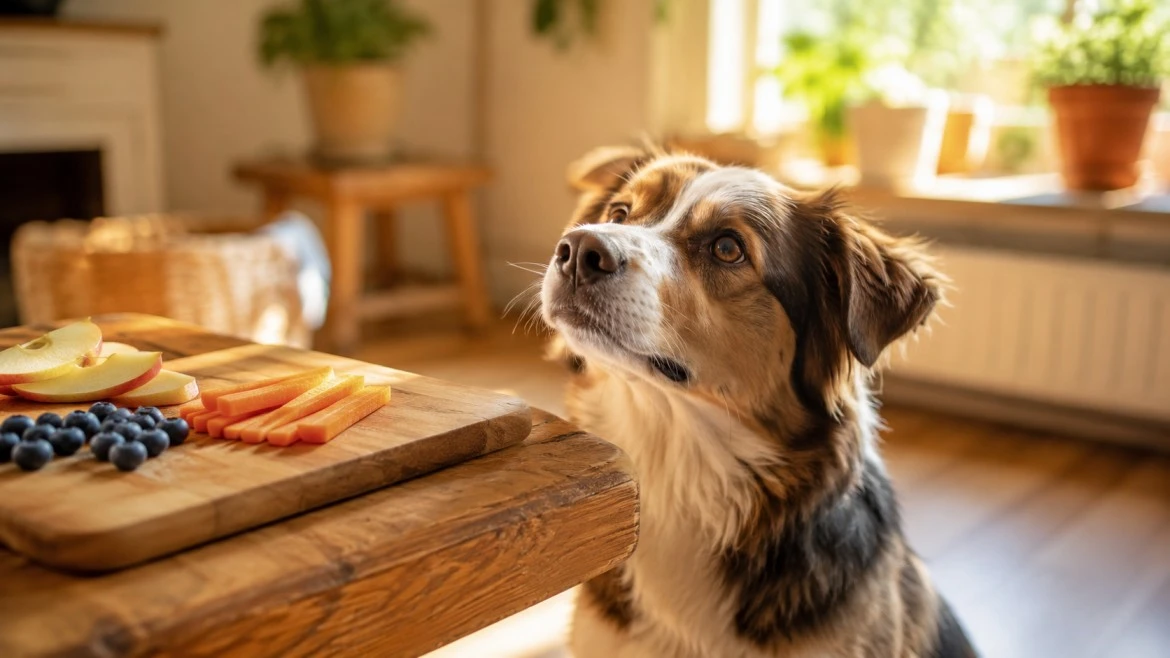
The good news is that a lot of popular fruits and vegetables are safe for dogs, with a few simple prep rules. According to the AKC:
- Apples - safe, but always remove the seeds and core.
- Carrots - a great low-calorie snack, high in fiber.
- Pumpkin - plain pumpkin puree supports digestion.
- Green beans - fresh, steamed, or canned (without added sodium) - safe in every form.
- Cucumber - low in fat and carbs, a good option for dogs carrying extra weight.
- Watermelon - safe, but only the flesh - the rind and seeds can cause an intestinal blockage.
- Blueberries - rich in antioxidants, can be given regularly in small amounts.
On the other hand, avoid grapes and raisins (mentioned above), cherries (the pit contains cyanide), and tomatoes - specifically the green parts (stem, leaves, unripe fruit), which contain solanine. Ripe tomato flesh without the green parts is generally fine in small amounts.
Which foods can dogs eat safely, in moderation?
These foods are generally considered safe, but always serve them plain, in small portions, without seasoning, salt, or added fat:
- Cooked meat (chicken, turkey, lean pork) - an excellent, easily digestible protein, served without skin, bones, or excess fat.
- Cooked fish (salmon, sardines) - good for skin and joints, always fully cooked, no more than twice a week.
- Cooked egg - fully cooked, never raw, due to the risk of Salmonella.
- Peanut butter - only if it's free of xylitol, given in moderation.
- Cheese - in small pieces, ideally a lower-fat variety, since some dogs are lactose intolerant.
- Plain yogurt - without added sugar or artificial sweeteners.
- Popcorn - plain only, no salt, butter, or caramel, and fully popped kernels.
How can you tell if a dog has eaten something dangerous?
Symptoms of food poisoning in dogs can show up quickly, but with some foods (like garlic) they can appear with a delay of a day or two. Watch for:
- Vomiting or diarrhea
- Unusual lethargy or weakness
- Tremors or loss of coordination
- Rapid breathing or a racing heart
- Increased thirst and urination
If you notice any of these signs after your dog has eaten something questionable, don't wait to see if it passes on its own - that's the moment to call your vet.
What should you do if your dog eats something dangerous?
If you suspect your dog has eaten one of the dangerous foods listed above:
- Stay calm and remove any remaining food from their reach.
- Try to remember (or estimate) how much they ate and when.
- Call your veterinarian or the nearest emergency vet clinic right away.
- Don't induce vomiting yourself unless your vet specifically tells you to - with some substances, this can make things worse.
In Moja šapa's digital pet health record, you can keep a log of your dog's allergies and sensitivities, which can help a vet act faster in an emergency.
Frequently Asked Questions
Can dogs eat rice? Yes, plain cooked white rice is safe and easy to digest, and it's often recommended as part of a bland diet when a dog has an upset stomach.
How much grape is dangerous for a dog? There's no known safe amount - even a small quantity of grapes or raisins can cause serious kidney problems in some dogs, so they should be avoided entirely.
Is milk safe for dogs? Many adult dogs have limited lactose tolerance, so milk in larger amounts can cause diarrhea. If you want to try it, offer just a small taste and watch how your dog reacts.
Can bones hurt a dog? Cooked bones splinter easily into sharp pieces that can injure the intestines or cause a blockage, so they should generally be avoided, especially cooked chicken bones.
This article is for informational purposes only and is not a substitute for veterinary advice. Always consult your veterinarian before changing your pet's diet, medication, or treatment.