
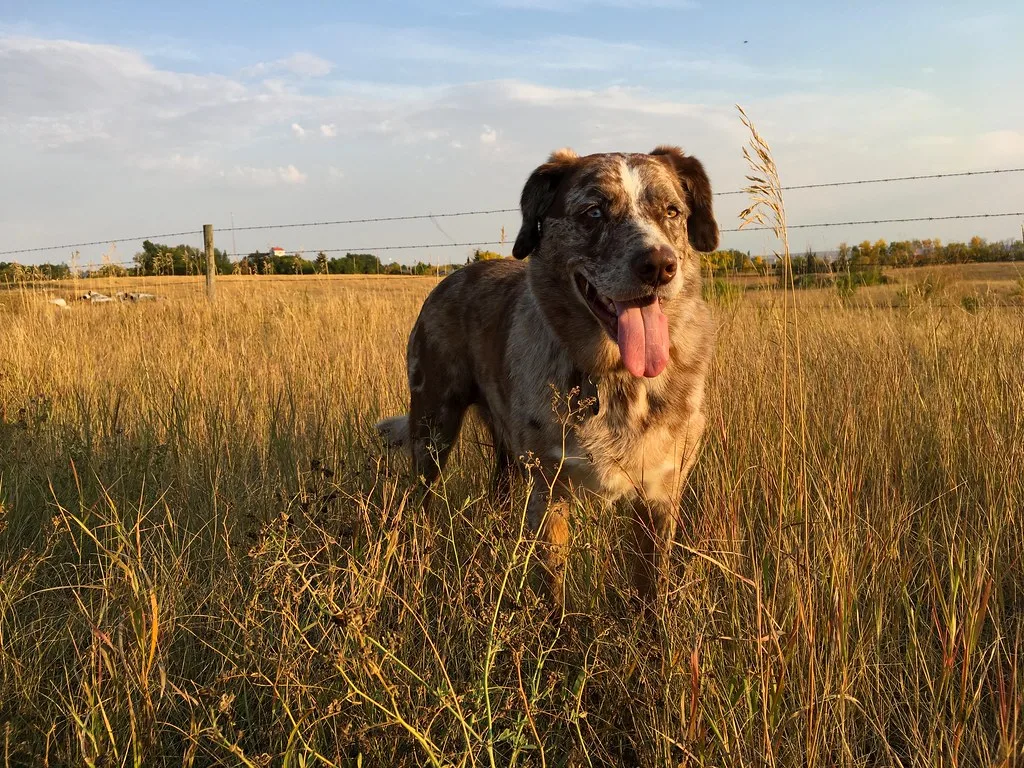
It is the middle of summer, the thermometer is well past 30°C, and your dog is bouncing by the door with the leash in his mouth, ready for that afternoon walk. It is hard to say no to that face. But this is exactly the moment - hot pavement, sun at its peak - when a dog is most exposed to a danger many owners underestimate: overheating.
Dogs do not cool down the way we do. While people sweat across their whole skin, a dog cools mainly by panting and through small sweat glands in the paw pads - which is far less efficient. That is why heat builds up quickly in dogs, and heatstroke can develop in just a few minutes.
Short answer: Protect your dog in summer by walking only in the cooler early morning and late evening, giving constant access to shade and fresh water, and never leaving him in a parked car - not even for a minute. Heatstroke sets in when a dog's body temperature climbs past roughly 40°C (104°F); it is an emergency that can lead to organ failure, seizures, and death without prompt care, according to VCA Animal Hospitals.
Which dogs are most at risk in the heat?
Every dog can overheat, but some tolerate heat far worse than others. According to VCA and the American Veterinary Medical Association (AVMA), higher-risk dogs include:
- Flat-faced (brachycephalic) breeds - Bulldogs, Pugs, French Bulldogs, Boxers, Boston Terriers. Their narrowed airways make panting inefficient, so they cool poorly.
- Overweight dogs - excess body fat traps heat.
- Very young and very old dogs.
- Dogs with heart or lung conditions.
If your dog falls into one of these groups, give him extra attention through the summer and keep him in the coolest part of the home.
How do you recognize heatstroke in a dog?
The early signs are easy to catch once you know what to look for. According to the AVMA, the first signals of heat stress are:
- Heavy, rapid panting
- Drooling and excessive salivation
- Seeking shade and reluctance to play or move
- Lethargy and increased thirst
If things worsen, serious signs of heatstroke appear: body temperature above 40°C (104°F), wobbliness, a very rapid heart rate, vomiting or diarrhea (sometimes bloody), stupor, seizures, and collapse. This is a medical emergency - every minute counts.
What should you do if your dog overheats?
If you suspect heatstroke, the goal is to cool your dog gradually and get to a vet as fast as possible. According to VCA, take these steps:
- Move your dog to a cool, shaded spot, out of the sun, right away.
- Pour cool - but not cold or icy - water over his head, belly, armpits, and paws. Ice-cold water can constrict blood vessels and actually slow cooling.
- Do not cover him with wet towels - they trap heat and block evaporation instead of cooling. Mist him lightly with cool water and use a fan or air conditioning.
- Offer a small amount of fresh water if he can drink on his own.
- Get him to a vet immediately, even if he seems to improve - internal damage is not visible from the outside.
Did you know a dog can keep deteriorating after appearing to recover? That is exactly why a veterinary exam is non-negotiable.
Why is hot pavement dangerous for a dog's paws?
This is the danger almost everyone misses. On a sunny day, asphalt and concrete can be 22 to 33°C (40 to 60°F) hotter than the air. When it is around 29°C (85°F) outside, pavement can reach about 57°C (135°F) - enough to burn a dog's pads in under a minute, and puppies and young dogs are especially vulnerable.
There is a simple check. The American Kennel Club (AKC) recommends the hand test: press the back of your hand to the pavement and hold it for 7 to 10 seconds. If it is too hot for you to bear, it is too hot for your dog's paws. Hot pavement also raises a dog's overall body temperature and adds to the risk of heatstroke.
So in hot weather, choose grassy or shaded routes, walk in the early morning or late evening, and if you truly must cross hot surfaces, consider protective dog booties.
How can you keep your dog cool at home?
A few simple habits make a big difference on scorching days:
- Fresh water always available - in several spots, ideally in the shade. Bring water and a collapsible bowl on longer outings.
- Walks only in the morning and evening, when both the air and the pavement are cooler. Avoid strenuous activity during the hottest hours.
- Constant access to shade whenever your dog is outdoors - a shaded spot or shelter is a must, per AVMA guidance.
- A cooling mat or damp towel for your dog to lie on.
- A fan or air conditioning in the room where your dog spends time.
- Never leave your dog in a parked car - the temperature inside rises to deadly levels fast, even with a window cracked.
What about shaving? For double-coated breeds, shaving down to the skin often does more harm than good, since the coat protects against both sun and overheating. Talk to your vet or groomer before trimming the coat.
Frequently Asked Questions
Do dogs sweat? Very little. Dogs cool mainly by panting and through small sweat glands in their paw pads, which is far less effective than human sweating. That is why shade, water, and rest are so important in the heat.
At what temperature is it too hot to walk a dog? There is no single number, but if the pavement is too hot for the back of your hand over 7 to 10 seconds, it is too hot for your dog's paws. On very hot days, shift walks to early morning and late evening.
Which breeds handle heat the worst? Flat-faced breeds like Pugs, Bulldogs, and Boxers have narrowed airways and pant poorly, so they are most prone to heatstroke. Overweight, very young, very old dogs, and those with heart or lung problems are also at higher risk.
Can I put ice in my dog's water? A little ice in the water bowl is perfectly fine and helps keep the water fresh. For a dog that is already overheating, however, use cool rather than icy water and head straight to the vet.
This article is for informational purposes only and is not a substitute for veterinary advice. Always consult your veterinarian before changing your pet's diet, medication, or treatment.