
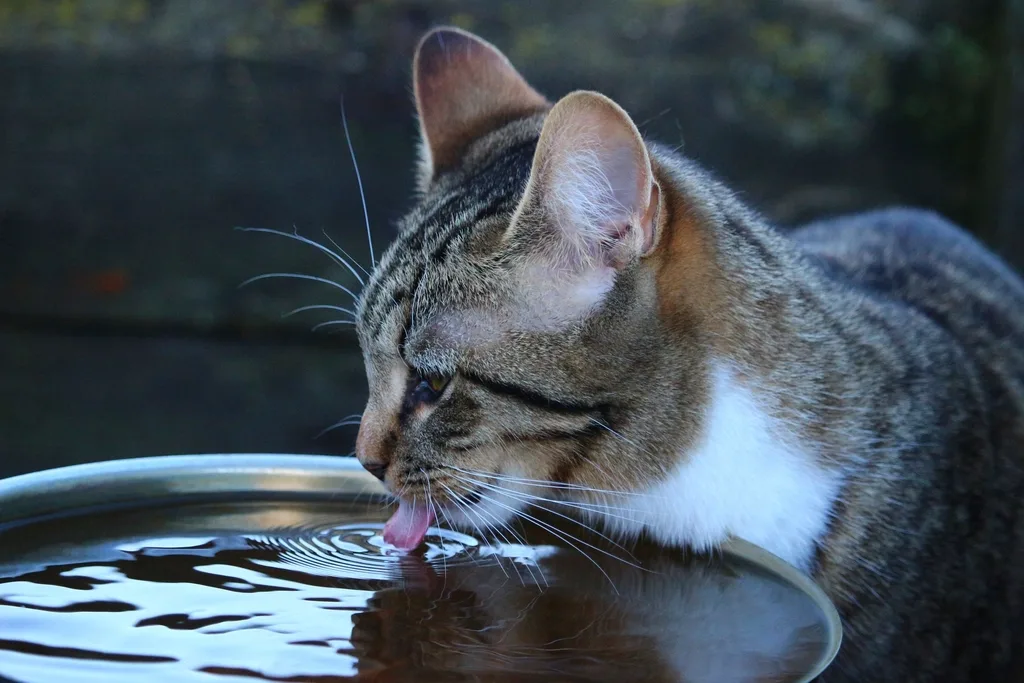
You fill the bowl with fresh water, and your cat walks right past it as if it isn't there. Or you catch her drinking from the tap, a glass, or even a flower vase while the full bowl sits untouched. Cats and water are a story of their own - and the question of how much they should actually be drinking crosses almost every owner's mind.
The right amount depends on your cat's weight, the type of food she eats, the temperature, and how active she is. Let's look at what counts as enough and how to notice when something is off.
Short answer: According to the Cornell Feline Health Center, a cat needs roughly 4 fluid ounces (about 120 ml) of water per 5 lbs (about 2.3 kg) of lean body weight per day. For an average 10 lb (about 4.5 kg) cat, that works out to roughly 1 cup (about 240 ml) a day - but from all sources combined, both drinking and the moisture in food. That's why cats on wet food naturally drink less from the bowl.
How much water does a cat actually need per day?
The general guideline cited by the Cornell Feline Health Center is about 120 ml of water per 2.3 kg (5 lbs) of lean body weight per day. In practical terms:
- A cat of about 2.5 kg (5-6 lbs): roughly 130 ml a day
- A cat of about 4.5 kg (10 lbs): roughly 240 ml a day
- A cat of about 6 kg (13 lbs): roughly 300 ml a day
The key thing to remember is that this figure covers all fluid, not just what your cat laps up from the bowl. Canned (wet) food can be up to about 80% water, so a cat eating it takes in part of her daily needs through her meals. Cats on dry food, by contrast, have to drink considerably more from the bowl, and that is completely normal.
These numbers are a frame of reference, not a rule set in stone. A healthy cat with constant access to fresh water generally regulates her own intake well.
What affects how much a cat drinks?
A cat's water needs are not the same every day. According to VCA Animal Hospitals, several factors shape them:
- Ambient temperature - in hot weather cats lose more fluid and need more water.
- Type of food - wet food means less drinking from the bowl, dry food means more.
- Body weight - a larger cat has a larger daily requirement.
- Activity level - more active cats use up more fluid.
- Overall health - some conditions and medications change how much a cat drinks.
Because of all this, there is no single number that fits every cat every day. What is worth tracking is what is normal for your cat, because a change from that baseline is what tells you the most.
How do you know if a cat isn't drinking enough?
Cats are experts at hiding when something is wrong, so it helps to know what to watch for. Signs of dehydration include:
- Lethargy, weakness, and poor appetite
- Dry gums and mucous membranes
- Sunken eyes
- Decreased skin elasticity
- Infrequent urination
There is a simple check you can do at home - the skin-tent test. Gently pinch the skin between the shoulder blades, lift it slightly, and let go. In a well-hydrated cat the skin snaps back into place immediately. If it returns slowly or stays tented, that is a likely sign of dehydration and a reason to call your vet.
Does your cat have a habit of skipping the water bowl? It doesn't automatically mean trouble, but it is worth keeping a closer eye on, especially if she eats only dry food.
Why does hydration matter so much for cats?
Hydration in cats is no small detail - it is directly tied to the health of the kidneys and urinary tract. When a cat takes in too little fluid, she produces more concentrated urine, which, according to the Merck Veterinary Manual, puts extra stress on kidney function and predisposes her to urinary tract issues.
Over time, chronically low water intake is linked to a higher risk of kidney disease and lower urinary tract disease. That makes helping your cat stay hydrated one of the most useful things you can do for her long-term health.
How can you encourage a cat to drink more water?
A few small changes to the environment often make a big difference. Here are tips recommended by veterinary hospitals such as VCA:
- Place several water bowls in different quiet spots around the home.
- Try a pet water fountain (or similar products available on the market) - many cats prefer moving water and drink more from a fountain than from a still bowl.
- Use a wide, shallow bowl so the whiskers don't brush the sides, which bothers some cats.
- Choose ceramic, glass, or metal bowls over plastic.
- Change the water daily and wash the bowl so it stays fresh.
- Add wet food or a little water to meals to raise total fluid intake.
- Keep water away from the litter box and food bowl - many cats avoid drinking near them.
Experiment a little: some cats like cold water, others prefer it at room temperature. It's worth finding out what your particular cat goes for.
And what if a cat suddenly starts drinking far more than usual? That deserves attention too. A sharp rise in thirst, or a cat that suddenly stops drinking, can signal kidney disease, diabetes, a urinary tract condition, or a digestive illness. In that case, see your vet - and never restrict your cat's water.
Frequently Asked Questions
How much water should a cat drink a day? According to Cornell, roughly 120 ml per 2.3 kg (5 lbs) of body weight - about 240 ml a day for a 4.5 kg (10 lb) cat, from all sources combined. Part of that comes from wet food, so cats eating it drink less from the bowl.
Why does my cat drink so little from the bowl? In most cases it's normal, especially if she eats wet food and gets some fluid through her meals. If she eats only dry food and avoids water, it's worth encouraging her with extra bowls or a fountain.
How can I tell if my cat is dehydrated? Watch for lethargy, dry gums, sunken eyes, and reduced skin elasticity. The skin-tent test - gently lifting the skin between the shoulder blades - helps: if the skin is slow to return, contact your vet.
When should a change in drinking worry me? If your cat suddenly drinks much more or much less than usual, it can point to kidney disease, diabetes, or urinary tract disease. Note the change and consult your veterinarian.
This article is for informational purposes only and is not a substitute for veterinary advice. Always consult your veterinarian before changing your pet's diet, medication, or treatment.