
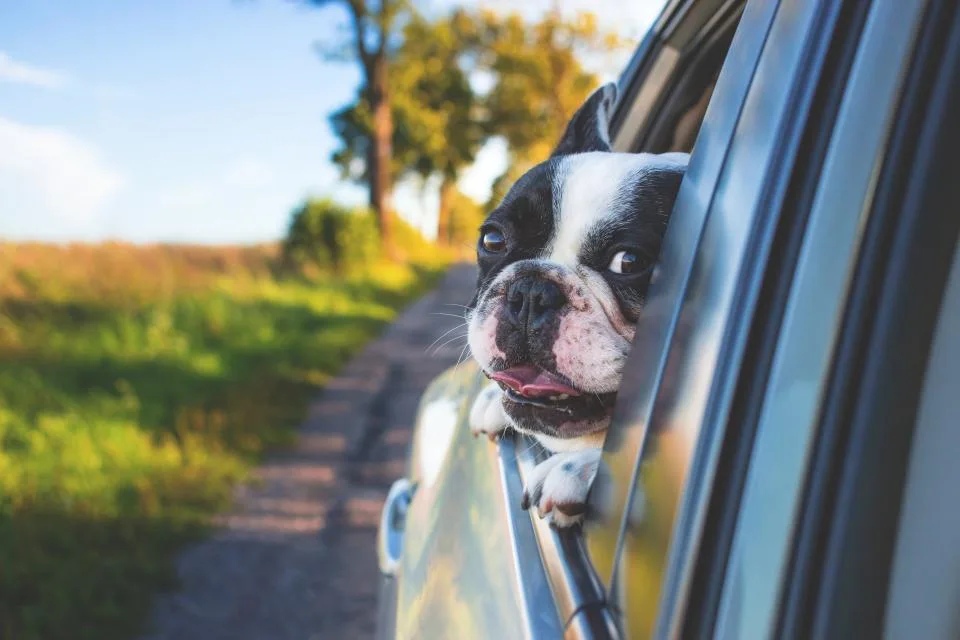
Windows down, music playing, and your best four-pawed friend in the back seat. Traveling with a pet can be wonderful - but in summer it also carries a few risks many owners underestimate. With the right preparation, the trip can be safe and enjoyable for both you and your pet.
Let's go through the essentials: how to secure a pet in the car, why you must never leave it in the vehicle, and how to prevent motion sickness on the road.
Short answer: Always secure a pet in the car - a dog with a seat-belt harness or a carrier, a cat strictly in a carrier. Never leave a pet in a parked car, not even briefly: according to the AVMA, a vehicle's interior can be more than 40°C (over 40°F) hotter than outside within an hour. Bring water, take breaks on longer trips, and make sure your pet has an ID tag and microchip.
How do you safely transport a pet in the car?
A loose pet in a vehicle is dangerous to itself and to the driver. According to the AVMA, a small pet can crawl into the footwell and interfere with braking, while a large one leaning on the driver blocks the view of the road. In a crash, an unrestrained pet can be injured by an airbag or thrown through a window.
That's why restraint is essential:
- Secure a dog with a dog seat belt or place it in a carrier fastened on the back seat or in the cargo area of a van/SUV.
- Transport a cat strictly in a carrier - never loose.
- The carrier should be large enough for the pet to stand up, turn around, and lie down.
- Don't let a dog ride with its head out the window, and use child locks on the windows.
Why should you never leave a pet in a parked car?
This is the most important rule of summer travel. According to the AVMA, a vehicle's interior heats up astonishingly fast: in 10 minutes the temperature rises by about 10°C (19°F), and in an hour by more than 40°C compared to outside. A cracked window or shade changes almost nothing.
The Merck Manual gives a concrete example: at an outdoor temperature of about 29°C (85°F), a car's interior passes 38°C (100°F) in just 10 minutes. For a pet, that can be fatal. The rule is simple and has no exceptions: don't leave a pet alone in a vehicle, not even for a moment.
How do you prevent motion sickness and stress on the road?
Many pets, especially puppies and cats, struggle with car rides. Signs of motion sickness and stress, according to VCA, include excessive drooling, whining, restlessness, lip-licking, lethargy, and vomiting.
Here's what helps:
- Don't feed your pet right before the trip. VCA notes that withholding food for a few hours before departure reduces nausea.
- Gradually get your pet used to car rides - start with short drives around the block and extend them over days and weeks.
- For cats, acclimate them to the carrier in advance at home: leave it open, with familiar bedding and treats inside, so it becomes a pleasant place.
- Add a familiar toy or blanket for a sense of security.
If motion sickness or anxiety is severe, consult your vet - there are safe products, but only a vet can prescribe them.
What should you pack for traveling with a pet?
A well-packed bag makes the trip easier. According to the AVMA and VCA, bring:
- Water from home and a bowl (unfamiliar water can cause stomach upset)
- Food and the usual treats
- A leash, waste bags, and cleanup supplies
- Medications if your pet takes any, and a basic first-aid kit
- Health record and proof of vaccination (especially rabies)
- Your vet's contact information
Why are an ID tag and microchip crucial when traveling?
In unfamiliar territory, the risk that a pet bolts or gets lost is higher than at home - a new environment, noise, crowds. That's why the AVMA recommends that a pet always wear an ID tag with up-to-date information and be microchipped, since a microchip significantly improves the chance that a lost pet is returned to you.
Here the advice goes a step further. A digital profile, like the one Moja šapa offers, lets whoever finds your pet see your contact details and call you with a single tap of a phone on the NFC tag - no app, no trip to a vet to read a chip. On a trip, far from home, that can be the difference that brings a pet home the same day. Before you leave, check that the profile information is current.
How do you plan a longer trip?
For longer trips, planning breaks is key. The AVMA recommends stopping roughly every two hours so a dog can stretch and relieve itself. Offer a little water at each break.
When you get out of the car, a dog must always be on a leash, with an ID tag - a new environment is unpredictable. For cats, breaks usually mean just a check and water, without taking them out of the carrier in the open. And during the drive, mind the temperature - air conditioning and shade make travel safer in the heat.
Frequently Asked Questions
Can a cat ride loose in the car? No. Always transport a cat in a carrier, for her safety and yours. A loose cat can panic, crawl under the pedals, or be injured in sudden braking.
How fast does a parked car heat up? Very fast. According to the AVMA, in 10 minutes the temperature rises by about 10°C (19°F), and in an hour by more than 40°C compared to outside. That's why you should never leave a pet alone in a vehicle, even briefly.
How do I keep my dog from getting carsick? Don't feed it right before the trip, get it used to rides gradually through short drives, and add familiar bedding. If nausea is severe, consult your vet about safe products.
What's the most important thing to bring on a trip with a pet? Water from home and a bowl, food, a leash, medications, a health record, and proof of vaccination. Also make sure your pet has an up-to-date ID tag and microchip in case it gets lost.
This article is for informational purposes only and is not a substitute for veterinary advice. Always consult your veterinarian before changing your pet's diet, medication, or treatment.