
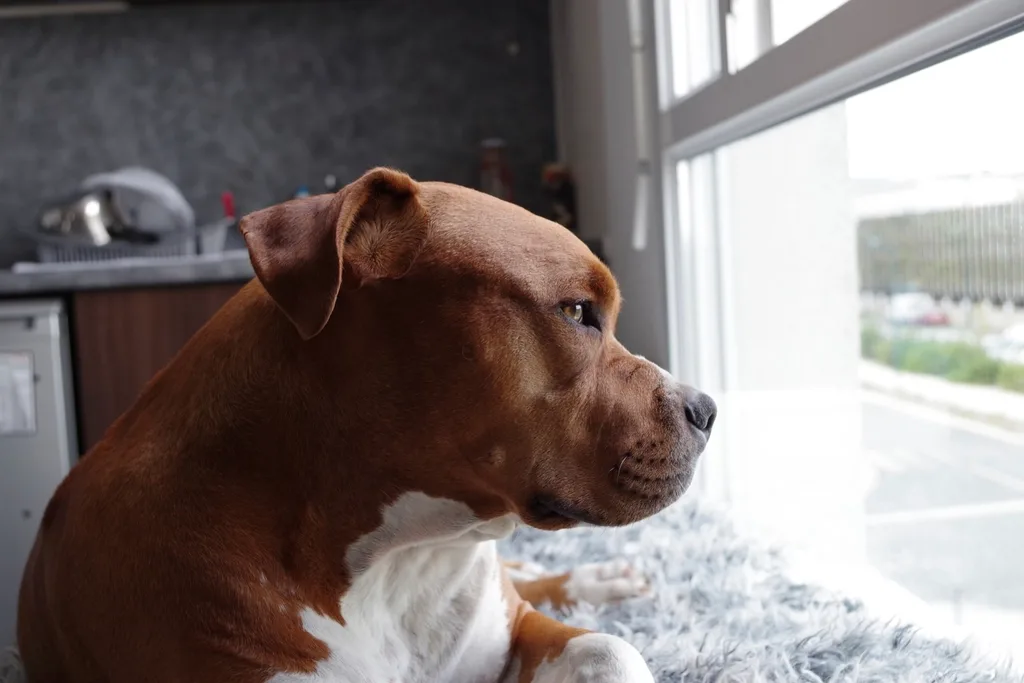
You pull on your jacket and your dog is already sitting by the door, watching your every move. The moment it closes, the howling starts and carries down the stairwell for hours. The neighbors complain, and you wonder whether your dog is sulking, bored, or genuinely suffering.
Short answer: Separation anxiety is real stress a dog feels when left alone, not spite or boredom. Start with a vet visit to rule out medical causes, then teach your dog gradually that short absences are safe: very brief departures, calm exits and returns, and no punishment. Stronger cases need professional help.
How do you recognize separation anxiety in a dog?
There is no single sign that settles it. The American Kennel Club (AKC) notes that dogs show stress in many ways, but a dog that shows several symptoms on a regular basis may be suffering from separation anxiety.
What to watch for:
- pacing, whining or trembling while you prepare to leave or while you are gone
- excessive barking or howling
- chewing or digging, particularly around doors and windows
- accidents in the house, urinating or defecating
- excessive drooling or panting
- desperate, prolonged attempts to escape confinement, which can end in serious injury
VCA hospitals add that signs can also include vomiting and damage to objects and to the exits of the home. What matters is the timing: if the behavior shows up when your dog is left alone, or when it notices you getting ready to leave, that is a clue.
Is it anxiety, boredom or something else?
The AKC stresses that separation anxiety is not the same as boredom: unlike a bit of mischief when a dog is alone, it is the result of genuine stress. And according to the ASPCA, anxious behavior is not the result of disobedience or spite. Your dog is not getting back at you for leaving. It is upset.
That is why telling causes apart matters. VCA writes that dogs that eliminate even when their owners are at home may not be fully house trained, or may have a medical problem. The same goes for pain: dogs in pain often do not settle well. So if the behavior appeared suddenly, VCA advises a veterinary exam.
Why do some dogs struggle to be alone?
The cause is not always clear, and there are often several. VCA lists circumstances that raise the likelihood of a problem: a traumatic separation, such as being dropped at a shelter, and any change in the household or home environment. It adds that some dogs are more frustrated than anxious. The first step in treatment is to identify the specific triggers for your particular dog.
So it is worth keeping a short log: does it happen only when you leave for work, or also when you pop out for bread? Does your dog react already to your keys or your jacket? At what time of day? That note will save you and your vet a lot of guessing.
How can you help your dog, step by step?
The method is unglamorous, but it teaches your dog that being alone is not dangerous. These are the main principles from VCA, the AKC and the ASPCA.
- Start with very short absences. The AKC advises leaving your dog for very short periods and gradually lengthening the time. VCA warns that you cannot suddenly go from a 5-minute departure to a 30-minute one, or your dog may become anxious, so the time has to grow slowly.
- Make leaving boring. VCA recommends avoiding a big goodbye, because it only draws attention to the departure. The ASPCA adds that all greetings, hellos and goodbyes alike, should be conducted in a very calm manner.
- Take the weight out of the cues. Pick up your keys, shoes or jacket at times when you are not leaving, so your dog learns that these do not always mean you are going.
- Give something good for while you are gone. VCA mentions toys stuffed with treats, and the ASPCA suggests a frozen food toy (or similar products available on the market), which takes your dog longer to empty.
- Make sure your dog gets exercise. The AKC notes that exercise cannot cure separation anxiety, but it certainly can help treat and prevent it.
The idea behind all of this is counterconditioning: over time, your dog learns that whatever it fears actually predicts good things. If you want a broader foundation for working with your dog, see our dog training basics.
What should you not do when your dog suffers while alone?
Some good intentions backfire.
- Do not punish. VCA is clear that both punishment and excited greetings must be avoided. The AKC adds that you should not punish your dog if you come home to damage or accidents, and the ASPCA says: do not scold or punish.
- Do not crate your dog all day. The AKC stresses that the goal is not to crate your dog all day, every day. The ASPCA warns that for some dogs the crate can cause added stress and anxiety, so watch how your dog reacts.
- Do not rely on a "calming" product alone. VCA states that tranquilizers alone do not reduce a dog's anxiety.
- Do not rush. VCA stresses that you should only increase the time you are gone if your dog remains relaxed when you leave the house.
Can a dog get medication for separation anxiety?
That decision belongs to a veterinarian alone. VCA writes that drug therapy can be useful, especially during initial departure training, but that you should talk to your vet about whether medication is appropriate for your pet. Medication is used alongside departure training, and a tranquilizer by itself does not reduce anxiety.
Never give your dog human medication or "something to calm it down" on your own. The same goes for supplements and products recommended online: ask your vet first.
When should you see a vet or a behaviorist?
Contact your vet when you notice signs of stress, especially if the behavior changed suddenly. If your dog is hurting itself trying to escape, do not wait for the training to start working.
When work at home is not enough, the AKC suggests considering a Certified Applied Animal Behaviorist or a veterinary behaviorist. The ASPCA emphasizes that desensitization and counterconditioning require the guidance of a trained and experienced professional. And if your schedule means your dog must be alone for long stretches, consider a pet sitter or boarding while you train.
Frequently Asked Questions
Can separation anxiety in dogs be cured completely? The goal is for your dog to tolerate being alone more calmly, and how fast and how fully that happens depends on the dog and the cause. A vet or behaviorist can best judge what is realistic for your dog.
Is my dog angry when it destroys things while I am out? No. The ASPCA stresses that anxious behavior is not the result of disobedience or spite. Your dog is under stress, and punishment does not treat it.
Does a long walk before leaving help? It helps, but it does not cure. The AKC says exercise cannot cure separation anxiety, but it certainly can help treat and prevent it. A walk adds to practicing alone time rather than replacing it.
Should I leave my dog in a crate while I am away? It depends on the dog. Some are comfortable in one, while for others it adds stress. Do not use it all day, watch how your dog reacts, and talk to your vet if your dog struggles.