
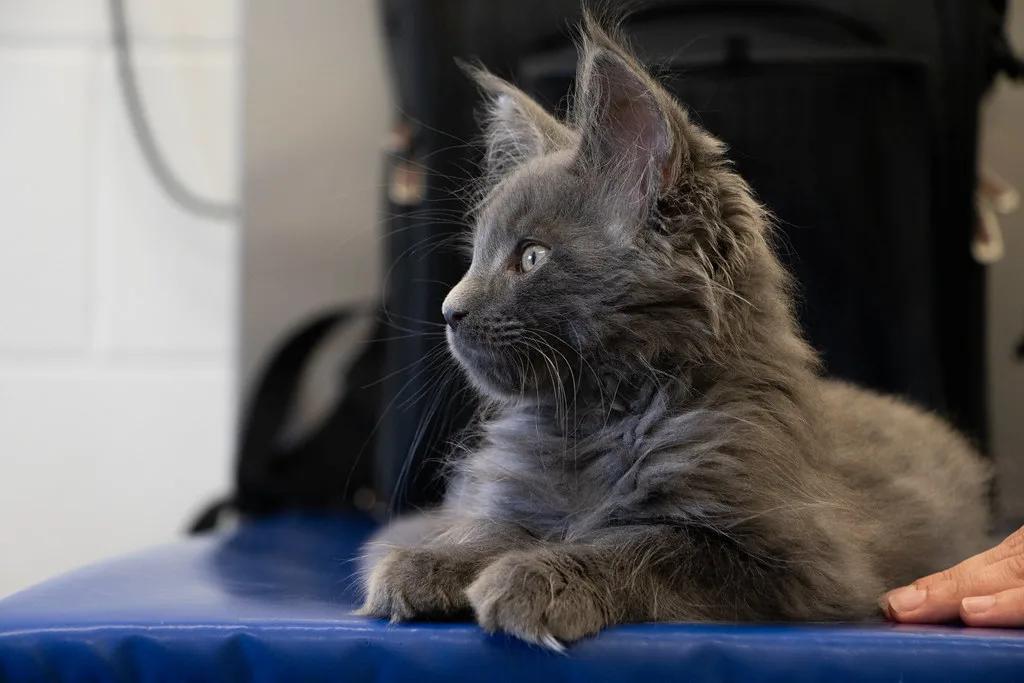
A two-month-old kitten comes home, hides for ten minutes, then falls asleep on your sweater. Everything is calm, and you start wondering when the first vet visit is and how many more will follow. The cat vaccine schedule is much easier to remember when you split it by year of life.
Short answer: Kittens usually get their first shots around 8-9 weeks, a second dose 3-4 weeks later, and finish the series somewhere between 16 and 20 weeks. The first booster follows a year after that, and adult cats then get boosters every 1-3 years depending on the vaccine and their risk. Your veterinarian sets the exact dates.
Do indoor cats need vaccines too?
Many owners assume a cat that never leaves the apartment can skip vaccination. Cat-care experts disagree. International Cat Care says core vaccines are considered essential for all cats, including indoor-only cats. The reason is simple: germs can come in unnoticed. VCA Hospitals notes that "pathogens can hitchhike into your home on shoes, clothing or your hands" and infect your cat.
Core vaccines protect against feline panleukopenia (feline distemper), feline herpesvirus and feline calicivirus. The vaccine against these three is often written as FVRCP. Rabies vaccination is part of the core group where rabies occurs.
Year one: when do kittens get their shots?
According to International Cat Care, the initial course is often started at 8-9 weeks, with a second injection 3-4 weeks later. A third dose at 16-20 weeks is now commonly recommended, especially for panleukopenia. VCA says a kitten receives 3-4 FVRCP doses and typically finishes the series between 16 and 18 weeks. The sources differ slightly, and the right timing depends on the vaccine and the clinic, so follow the schedule your vet writes down.
Per VCA, the rabies vaccine is given once a kitten is at least 12 weeks old, and it is due again one year after the first dose.
A rough first-year calendar:
- around 8-9 weeks: first dose of the core vaccine
- 3-4 weeks after the first dose: second dose
- from 12 weeks: rabies vaccine, if your vet plans it
- 16-20 weeks: final dose of the core vaccine
What about the feline leukemia vaccine?
According to VCA Hospitals, the feline leukemia (FeLV) vaccine is recommended for all cats under one year of age. The cat should be tested for FeLV before vaccination. The initial series is two doses 3-4 weeks apart, with a booster one year later.
After that, it is only recommended for at-risk cats, every two years. At-risk cats include those that go outside, board frequently or mix with other cats.
When is the first booster after the kitten series?
The first booster comes one year after the kitten series ends. VCA says that is usually when the cat is about 16-20 months old, and International Cat Care likewise advises a first booster 12 months later. If your vet plans it, the rabies vaccine is repeated around then too.
How often does an adult cat need vaccines?
Adult schedules get more spread out. VCA says FVRCP is recommended every 3 years after the one-year booster. International Cat Care gives a wider range: boosters may only be needed every 1-3 years, depending on the vaccine, the disease and the individual cat's risk. Per VCA, rabies is given either annually or every 3 years, depending on local regulations and vaccine availability.
Vaccines that are not core are given only when there is a genuine risk of exposure, for example because of outdoor access or frequent contact with other cats.
The cat vaccine calendar by year, in one place
- Year one: the kitten series (about 8-9 to 16-20 weeks), rabies from 12 weeks, FeLV as your vet advises.
- Year two (one year after the series, usually at 16-20 months): first core booster, rabies, and the FeLV booster if that series was started.
- Year three onward: core vaccine every 1-3 years, rabies according to local rules and the vaccine available, FeLV only for at-risk cats.
- Senior cats: The sources we used give no separate "senior" schedule. Your vet adjusts vaccination to the cat's health and lifestyle.
What is normal after a vaccine, and when should you call the vet?
According to VCA Hospitals, mild reactions are common: redness, slight swelling and tenderness at the injection site, tiredness, a lower appetite and a slight fever. If they last longer than 24 hours or your cat seems very uncomfortable, contact your vet. A small firm lump at the injection site is usual and should shrink within about two weeks. If it lasts beyond three weeks, grows or hurts, have it checked.
Go to a vet right away for collapse, trouble breathing, hives, or swelling of the eyes, muzzle or face. These reactions can start within minutes to hours. If you are worried, stay at the clinic for 30-60 minutes after the shot.
How to prepare for the vet visit
Bring whatever you already have on your cat: dates of earlier vaccines, the vaccine name if you know it, and notes on how your cat handled previous doses. Write down your questions too, for example whether your cat goes outside, stays in a boarding facility or will travel, because that affects which vaccines your vet suggests. Carry your cat in a secure carrier, and give her a quiet corner and fresh water afterwards.
Vaccination and travel
If you travel with your cat from Serbia to the European Union, the Serbian Veterinary Directorate said in June 2026 that a microchip, a valid rabies vaccination and a veterinary certificate are still required, while the rabies antibody blood test is no longer needed. Check this before every trip. A vaccine visit is also a good moment to check the microchip, which we cover in Microchipping your pet. Vaccine dates are easy to lose, so note them in the health record in the Moja šapa app, where you can also save the date of the next dose.
Vaccines are not the only protection. Parasites matter too, as we explain in Fleas and ticks in cats.
Frequently Asked Questions
Does an indoor cat need to be vaccinated? Yes. International Cat Care says core vaccines are essential for all cats, including indoor-only ones, because germs can be carried in on shoes or clothes.
Is rabies vaccination mandatory for cats in Serbia? We found no official source confirming that for all cats, so we make no claim. A valid rabies vaccination is required to travel to the EU. Ask your vet about your own situation.
When does a kitten get its first vaccine? Most often around 8-9 weeks, with the second dose 3-4 weeks later. Your vet sets the exact schedule.
What if a booster appointment was missed? Do not restart on your own. Contact your vet with all the dates you have, and they will decide what is needed.
This article is for informational purposes only and is not a substitute for veterinary advice. Always consult your veterinarian before changing your pet's diet, medication, or treatment.